
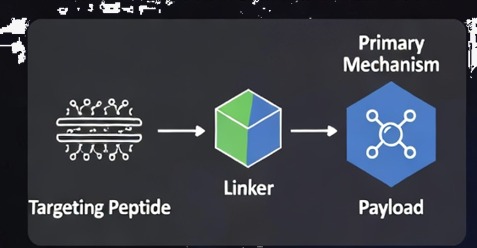
A modular, peptide-directed delivery system built to restore mitochondrial energy production at its source, paired with a stress-responsive, site-specific mechanism of action.
Designed for preferential delivery to selected cells - the address label that determines which tissue the payload reaches.
Engineered for stability in circulation, then controlled release of the payload once inside the target cell.
Supports both small-molecule and biologic payloads - the primary therapeutic mechanism - on the same delivery backbone.
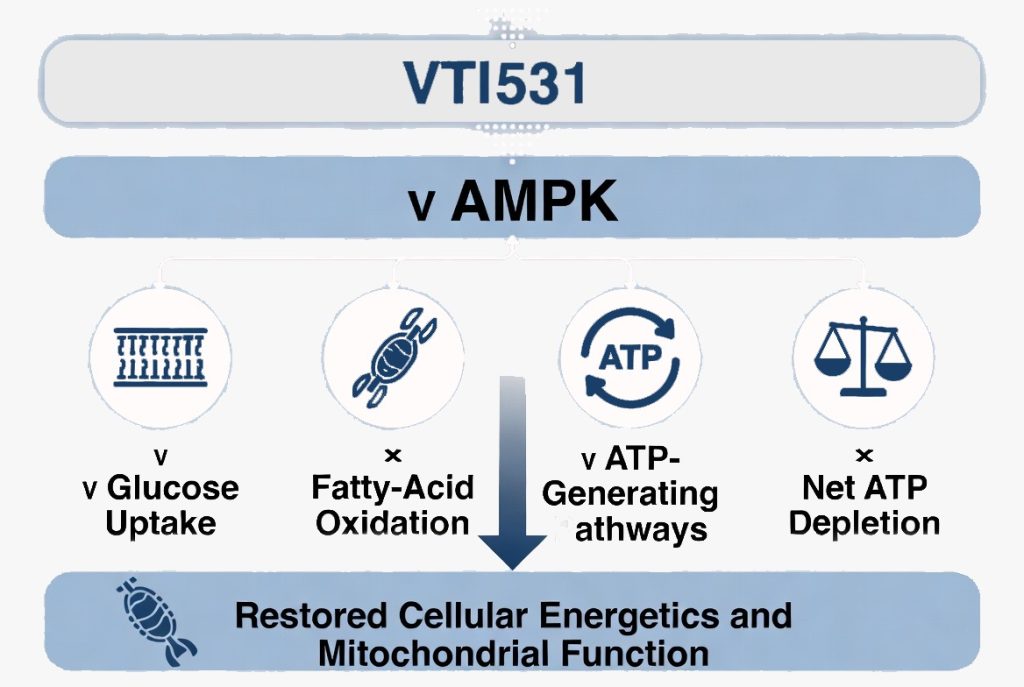
An AMP-mimetic, direct AMPK agonist derived from AICA riboside. AMPK is the master regulator of cellular energy homeostasis – it senses the balance between ATP depletion and AMP/ADP accumulation, then coordinates metabolic pathways to match nutrient supply with energy demand.
In stressed myocardium, VTI-531 reprograms metabolism to reduce net ATP depletion, enhances ATP-generating pathways including glucose uptake and fatty-acid oxidation, and restores a favorable ADP:ATP balance.
Source data on file; full mechanism-of-action references available on request. (The source presentation flagged this claim for a citation that hadn’t been added yet – carrying that forward rather than inventing one.)
Because the bioenergetic payload sits on a modular backbone, it can be combined with a complementary therapeutic mechanism – extending the platform beyond bioenergetics alone.
Pairs mitochondrial energy restoration with a complementary mechanism aimed at reducing fibrotic remodeling in affected tissue.
Combines the core bioenergetic effect with a mechanism targeting the inflammatory component of metabolic and cardiovascular disease.
Adds a mechanism aimed at ischemic tissue response, for indications where oxygen-supply mismatch compounds mitochondrial stress.
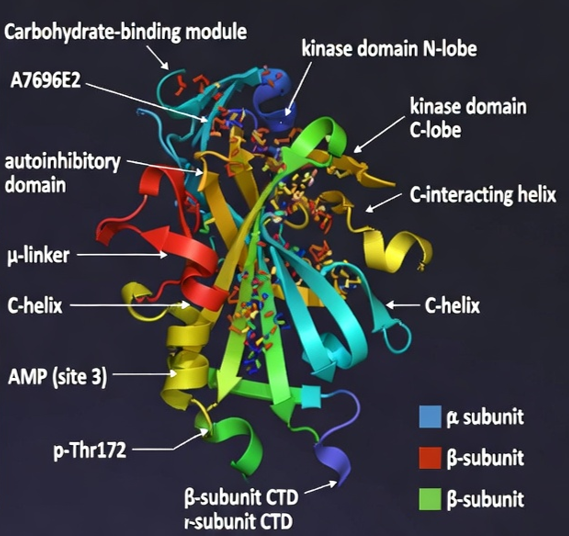
AMPK is the master regulator of cellular energy homeostasis. It:
• Senses the balance between ATP depletion and AMP/ADP accumulation
• Coordinates metabolic pathways to match nutrient supply with energy demand
•In stressed tissue, promotes bioenergetic recovery and metabolic efficiency through its activation
VT11531 is an AMP-mimetic, direct AMPK agonist derived from AICA riboside. Its effects on AMPK activation include:
• Reprogramming metabolism to reduce net ATP depletion
• Enhancing ATP-generating pathways, including glucose uptake and fatty acid oxidation
• Restoring a favorable ADP: ATP balance and cellular energy homeostasis
• Supporting recovery of mitochondrial metabolic function in dysfunctional myocardium
IP protection is built in layers around the platform core – from the targeting chemistry itself out to the specific therapeutic applications built on top of it.
• Issued and pending patent protection
• Tissue-directed delivery technologies
• Peptide variants and optimization strategies
• Provisional patent application pending
• Selected conjugate compositions, linkers, and delivery architecture
• Therapeutic applications
• Composition-of-matter patent applications pending
• Next-generation bioenergetic modulators
• AMPK / adenosine-regulation biology
• Complementary anti-fibrotic mechanisms
• Complementary anti-inflammatory mechanisms
• Complementary ischemia-modulating mechanisms

A clinical-stage biopharmaceutical company developing MitoForge™, a precision intracellular delivery platform for mitochondrial metabolic dysfunction.
© 2026 ViCardia Therapeutics, Inc. All Rights Reserved.
MitoForge™ and Precision Intracellular Delivery™ are trademarks of ViCardia Therapeutics, Inc.