
Focus, with future expansion to skeletal muscle
| Indication | U.S. Population / Year | Annual SOM / Year |
|---|---|---|
| Acute Decompensated Heart Failure | 1.2M hospitalizations | $1B - $3B |
| Heart Failure w. preserved Ejection Fraction (HFpEF) | 3.3M population | $6B - $8B |
| Friedreich's Ataxia (FRDA) | 5k - 6k population | $0.5B - $1B |
| Cardiac Muscle Atrophy (CMA) in Space Travel | ~1K active/future astronauts | $1B - $2B (Est.) |
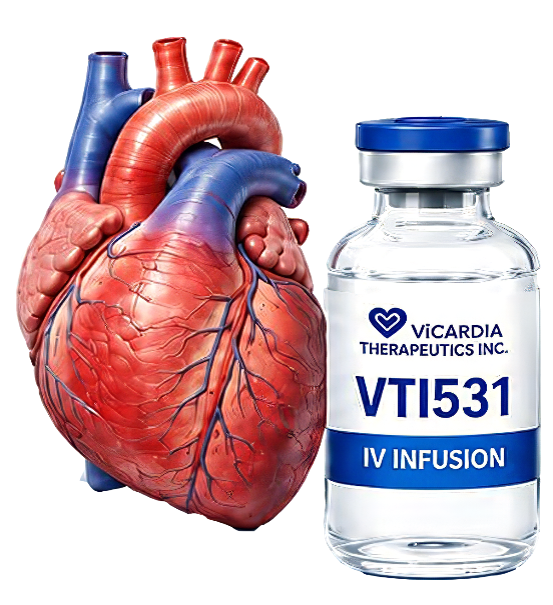
IV VTI-531 infusion during the hospital stay begins bioenergetic rescue immediately.
Improves myocardial function and restores ATP generation during the recovery window.
A seamless transition to once-daily oral VTI-531/h-CTP for long-term cardiac maintenance.
• Impaired ATP production
• Systemic congestion
• Reduce myocardial efficiency
• Current therapies often increase oxygen demand
After stabilization, seamless transition to once-daily oral VTI1531/h-CTP for targeted long-term cardiac maintenance — extending bioenergetic benefits beyond the hospital.
U.S. Population / Year
Annual SOM / Year
VTI-531 and VTI-531/h-CTP target the underlying mitochondrial metabolic dysfunction in HFpEF, a large patient population with no approved therapies addressing this root cause.
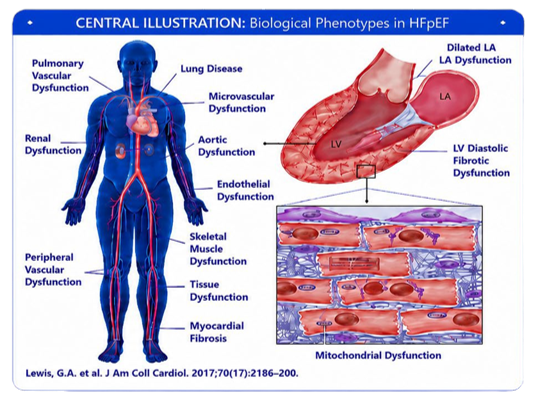
Cardiac-specific delivery to sustain mitochondrial function improvements. Once-daily oral dosing in development.
Population
Annual SOM / Year
A precision medicine approach to a rare, genetic disease affecting roughly 1 in 40,000 people in the U.S., with onset typically in adolescence.


A GAA-repeat expansion in the FXN gene leads to frataxin loss, mitochondrial iron dysregulation, and bioenergetic dysfunction. The clinical consequences are severe: progressive ataxia, muscle weakness, and scoliosis; cardiomyopathy, the major cause of mortality; and diabetes, neuropathy, and neurological decline. Progressive neurodegeneration and cardiomyopathy affect more than 90% of patients, and no approved disease-modifying therapies currently exist for the underlying mitochondrial dysfunction.
Designed for cardiac-specific delivery to address FRDA-related cardiomyopathy and mitochondrial iron accumulation, supporting mitochondrial energy homeostasis in a way that may delay disease progression.
An oral formulation is in development for chronic use, with an IV pump option for advanced or intolerant patients.
U.S. Population / Year
Annual SOM / Year
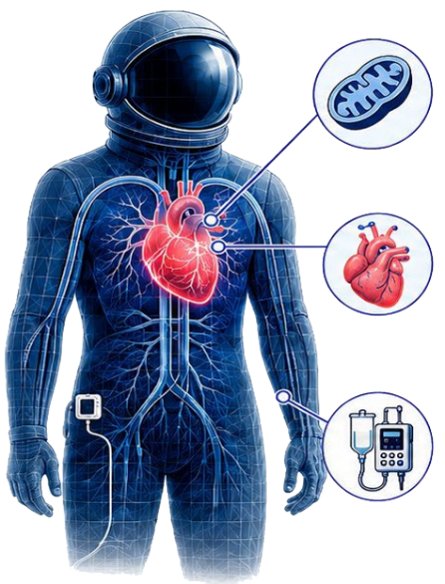
Active & future astronauts
Estimated emerging SOM
See the delivery architecture and mechanism of action that underlies every indication, or get in touch to discuss the program in more depth.

A clinical-stage biopharmaceutical company developing MitoForge™, a precision intracellular delivery platform for mitochondrial metabolic dysfunction.
© 2026 ViCardia Therapeutics, Inc. All Rights Reserved.
MitoForge™ and Precision Intracellular Delivery™ are trademarks of ViCardia Therapeutics, Inc.